01
Typing → Delegating
One engineer used to mean one cursor. Now it means a fleet of agent sessions running in parallel — and the constraint stops being how fast anyone types.
MCP GUARD
Agent-fleet control plane
Coding agents multiply your output — and your spend, and your audit surface. MCP Guard is the control plane that keeps all three honest: fleets governed by policy, costs priced to the cent, and every line provable — across every runtime you run.
Governs Claude Code · Cursor · Devin · Copilot · in-house agents
For engineering teams
Run it yourself →
You already run agents. Get the most out of them without the security risk — the control plane, on your repos, today.
For everyone else
Have it built for you →
Need software, not a platform? Our governed fleet builds it — faster and more accountable than a dev shop.
The IDE was built for writing code. This is where you ship it. The center of gravity is moving — out of the editor, into the control plane. The terminal and the IDE become where agents work. This is where you do.
01
One engineer used to mean one cursor. Now it means a fleet of agent sessions running in parallel — and the constraint stops being how fast anyone types.
02
You cannot eyeball ten thousand diffs. You can write the rules once — approved agents, models, MCP servers, tools — and have every merge evaluated against them, mechanically.
03
“An agent wrote this” satisfies no auditor. A hash-chained ledger of every decision, exportable and independently verifiable, does.
Govern. Observe. Intervene. Prove.
Not a CCTV wall for watching a thousand agents — an exception-routed surface. Set policy once, let the fleet run, touch only what the policy escalates, and keep cryptographic evidence of all of it.
Policy as code, simulated before it ships.
Every in-flight session, every runtime, one surface.
Exception-routed triage, not a CCTV wall.
A ledger your auditor can verify alone.
Three surfaces. One control plane.
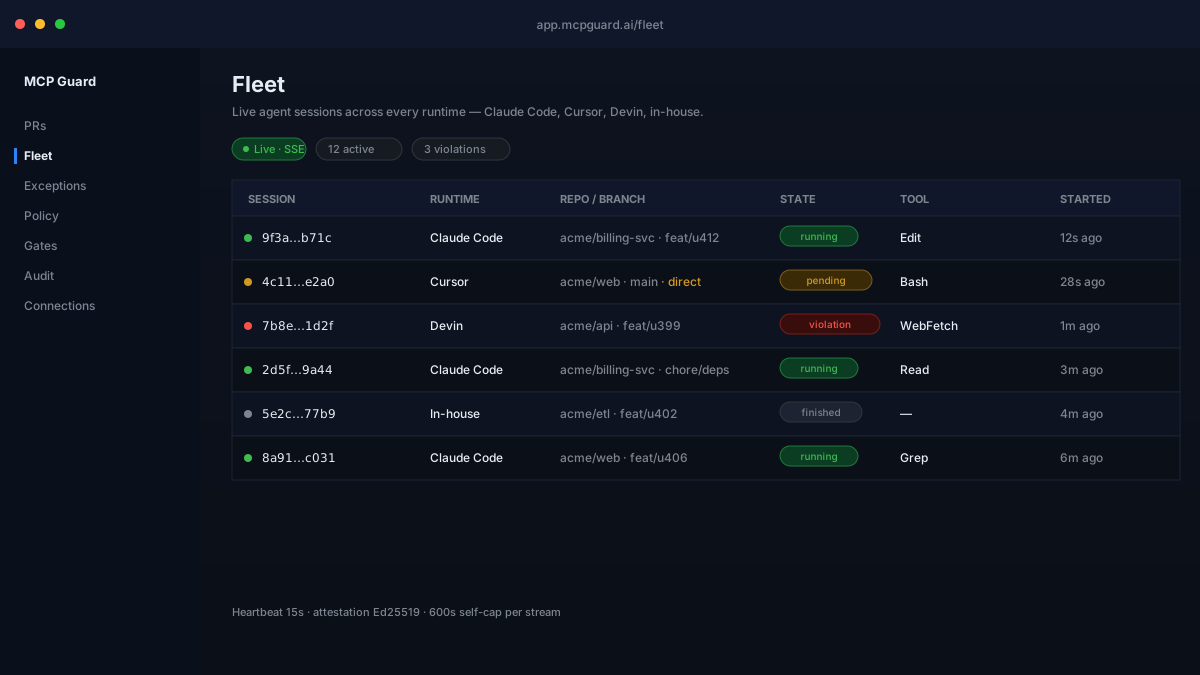
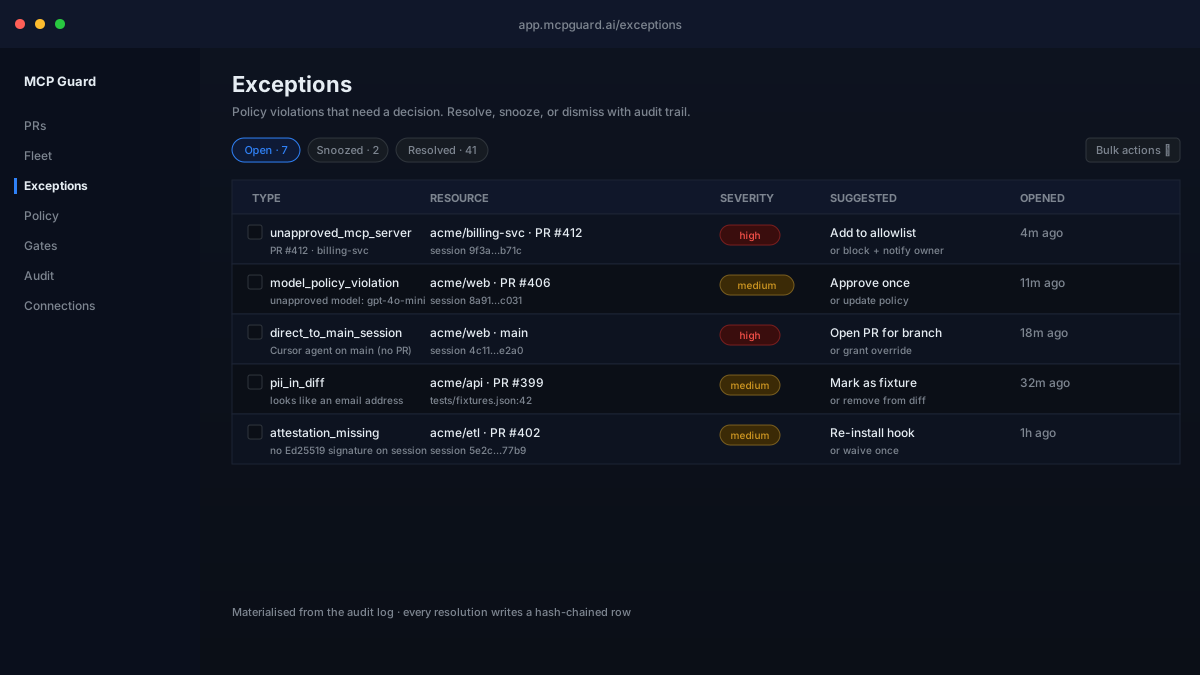
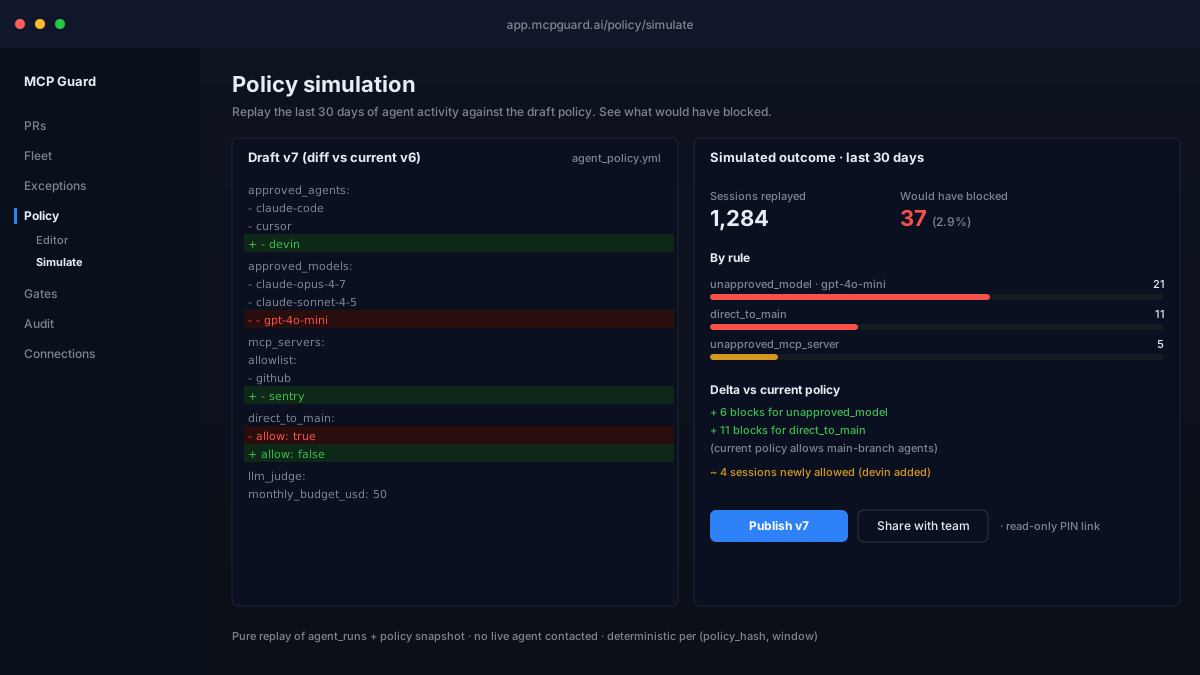
Three steps from install to auditor-ready.
01
Install the GitHub App, point your agent runtimes at the /v1/agent-runs endpoint, and pick a policy template. First check-run in minutes.
02
Every PR runs the gates. Every session is attested and costed. The merge button becomes the policy boundary, not a hope.
03
Auditors get a signed-URL share into the hash-chained ledger. Compliance reviews evidence; engineering keeps shipping.
For delivery firms
The leverage of a consulting firm used to be headcount. Now it's a governed agent fleet with a senior engineer at the controls. We run our own delivery practice on MCP Guard — opportunity sourcing through client handoff — and license the same platform and playbook to firms making the shift.
01
A read-only scout agent walks your saved searches and lands qualified opportunities in the Hunter pipeline.
02
Quote, discovery workspace, and kickoff brief in one engagement record — with a budget guardrail watching cost-to-deliver from day one.
03
A governed agent fleet does the work inside a provisioned client repo, seeded with a PR-reviewed, versioned, licensed agent pack.
04
Deliverables tracked against acceptance, a client status portal behind secure tokened shares, and audit-grade evidence of everything that ran.
A live status portal — deliverables against acceptance criteria, progress without meetings, behind a secure time-bounded link. Self-serve intake with secure document upload. Evidence, not vibes.
Realized margin per engagement — fixed fee against cost-to-deliver, priced from the same to-the-cent fleet telemetry. Budget guardrails at 70 / 90 / 100%. A portfolio control tower across every engagement.
Everything above is shipped. So is all of this.
01
Graduated thresholds per session, UTC-day, actor, or agent type. Worker-evaluated — breaches notify exactly once, even if nobody opens the dashboard.
02
30-day replay of real agent activity against any draft. See exactly what would have blocked before you publish.
03
Ranked cost and speed recommendations with one-click model write-back — and realized-savings tracking after you apply them.
04
Declared agent team versus the invocation graph that actually ran, cross-session, with gap and drift overlays.
05
Three configurable tiers — warn, alert, flag — with per-stretch re-arming and snooze. Terminal flags mark work abandoned.
06
CSV, JSON, and PDF packets from the hash-chained ledger; PIN-gated auditor shares with email allowlists and trust banners.
07
Write custom gates against a typed SDK; they run in a hardened subprocess sandbox, never inside the engine.
08
Delivery, compliance, sales, and operator seats with server-enforced route floors — pending invitees see nothing until seated.
A hash-chained ledger, exported on demand.
Every policy decision and agent action is written into a Postgres ledger whose rows chain by SHA-256. The chain is verified hourly. Reviewers get a PIN-gated, read-only, time-bounded share of the slice you authorise — never raw database access, never an opaque PDF you have to vouch for in person.
Run your fleet like it's production.Because it is.